
Cutting Downtime in Legacy Automation Without Full Replacement - TALS
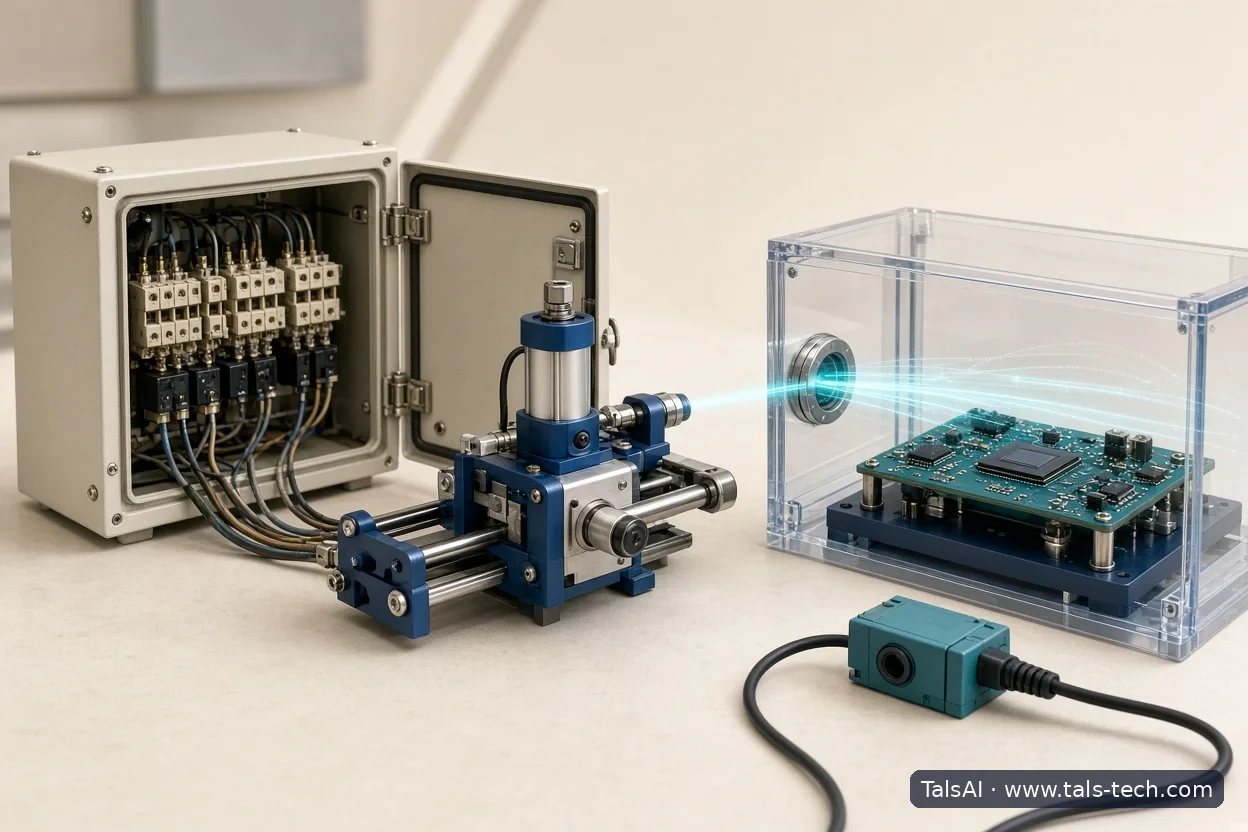
AI-generated industrial technology concept illustration, not a customer site or product screenshot.
Industrial Equipment News framed a practical way to reduce downtime in legacy automation without replacing everything. The headline points to a brownfield problem that many plants face: installed assets are too valuable to discard, but too opaque to maintain efficiently.
What the source signals
The only verified fact from the supplied summary is the title itself: a practical approach to reducing downtime in legacy automation, with the explicit condition that the existing system is not replaced wholesale. That wording matters. It does not claim a specific vendor, protocol, ROI, or pilot outcome. It signals that the article is likely about incremental intervention rather than a capital project.
For an editorial reading, the headline is enough to place the topic in a familiar industrial reality. Many factories still run PLCs, sensors, drives, and HMIs that were commissioned years before modern MES or analytics layers existed. The practical question is not whether those assets can be replaced, but whether they can be made observable and maintainable at a cost that the plant can justify.
Operational implications
A brownfield downtime reduction program usually starts with the smallest useful layer of visibility. Plants often already have alarms, motor current, cycle counts, or fault codes, but those signals remain trapped in local panels or operator memory. The first operational gain comes from turning intermittent symptoms into a shared timeline: when a machine stopped, what alarm appeared, which recipe or shift was active, and whether maintenance responded immediately.
That shared timeline changes maintenance behavior. Instead of treating every stop as an isolated event, teams can group recurring micro-stoppages, identify the assets that consume the most unplanned time, and decide whether the issue is mechanical wear, sensor drift, parameter tuning, or operator workaround. The result is not a fully digital twin; it is a more disciplined maintenance loop built around the equipment that is already installed.
Limits of incremental retrofit
The limitation is that visibility alone does not guarantee better decisions. If a plant only records stoppages without linking them to root causes, the data becomes another dashboard that operators ignore. The harder work is governance: standardizing fault codes, defining what counts as a planned versus unplanned stop, and giving maintenance a reason to trust the signal rather than override it.
There is also a boundary condition. Some legacy controllers cannot expose enough detail, and some machines are too degraded for monitoring to create value. In those cases, a targeted sensor retrofit or a small edge gateway may be enough, but a full asset replacement may still be the right answer. The headline’s practicality depends on knowing when incremental monitoring is sufficient and when it is merely delaying a necessary modernization.
Outlook
From TALS’s smart-manufacturing perspective, the most useful takeaway is not a technology claim but a sequencing principle: make legacy assets legible first, then decide which upgrades are justified by actual downtime patterns.
Related product and scope
For this topic, explore TalsAI’s MES manufacturing execution system: work orders, shop-floor reporting and production progress; machine connectivity is project-specific. This is not an endorsement by the original news source.
Source date: 2026-11-09 22:01 UTC
Original source