
Yorkshire Robotics Hub Targets Regional Manufacturing Automation Gaps - TALS
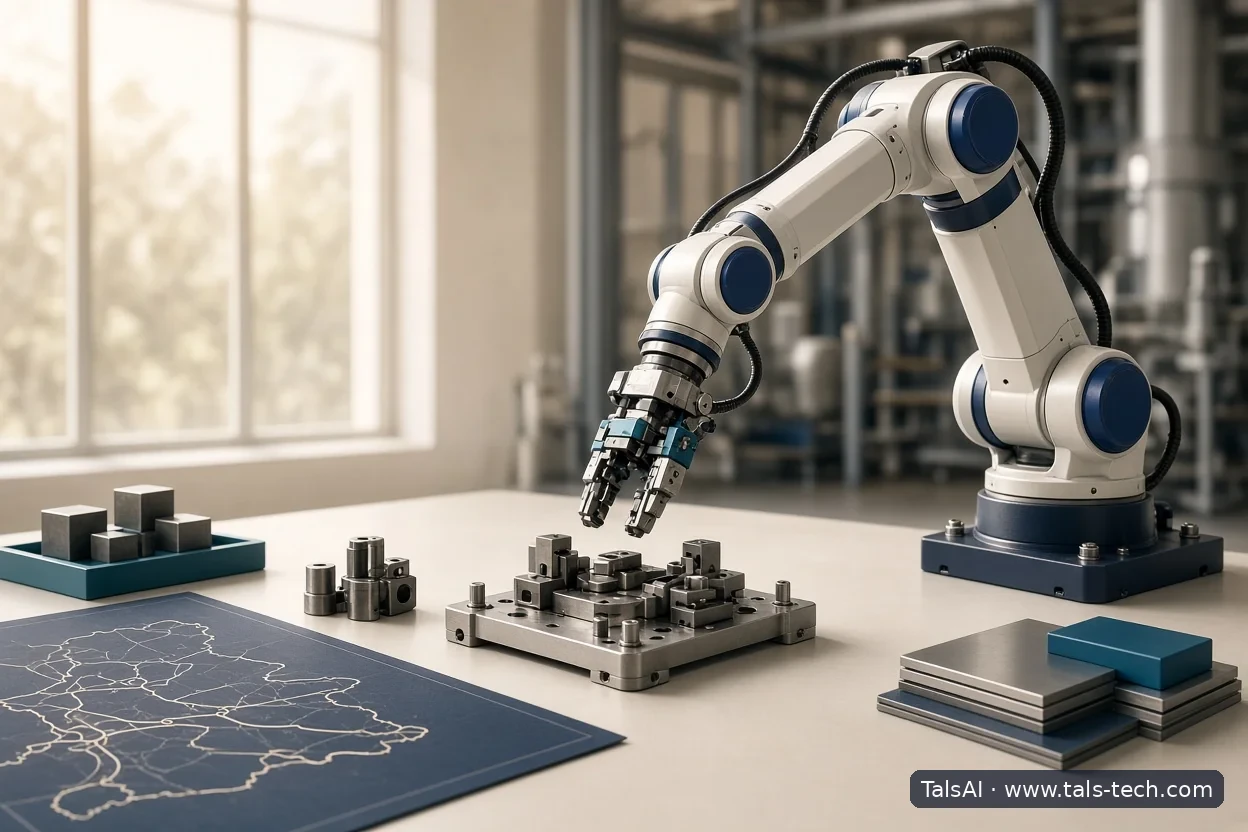
AI-generated industrial technology concept illustration, not a customer site or product screenshot.
The University of Bradford is spearheading a £3.67 million initiative to tackle the persistent automation divide confronting regional manufacturing. Supported by funding from Innovate UK, the 42-month programme focuses directly on easing the deployment of industrial robotics on factory floors.
Targeted Regional Capital for Factory Automation
The University of Bradford has officially launched the £3.67 million Yorkshire Robotics Adoption Hub, bolstered by a £2.75 million grant from Innovate UK. Scheduled across a 42-month delivery window, the programme is explicitly designed to counter lagging productivity by lowering the operational threshold for industrial automation.
Publicly funded initiatives of this nature highlight a critical shift from generic R&D subsidies toward active industrial enablement. For mid-tier fabricators and discrete manufacturers, early feasibility studies and physical experimentation often represent insurmountable overheads, making regional access to testing facilities a vital de-risking catalyst.
Operational Realities of Robotic Integration
Deploying robotics within brownfield environments rarely follows a straightforward plug-and-play trajectory. While acquiring an articulated arm or automated mobile unit is a transactional capital expenditure, synchronizing robotic motion with legacy tooling, varied tolerance thresholds, and upstream material flows dictates whether line availability actually improves or suffers from recurrent alarms.
Facilities adopting automation must solve systemic human-machine integration hurdles. Operators who historically relied on visual inspections and tactile adjustments need structured protocols to handle tool-wear calibration, unexpected cell lockouts, and safety handoffs. Without disciplined interface standards, introducing automated hardware risks shifting manufacturing bottlenecks from manual labor to intermittent technical stoppages.
The 42-Month Horizon and Long-Term Viability
A central operational dilemma for time-bound initiatives like this 42-month programme is ensuring institutionalized capabilities outlast grant allocations. If regional manufacturers treat university hubs strictly as external consulting resources rather than training grounds for in-house engineering competency, technical dependencies inevitably persist once public funding cycles wind down.
Furthermore, isolated automation islands fail to deliver maximum return without coherent plant-floor traceability. To truly uplift regional industrial productivity, engineering leaders must link mechanized workstations directly to shop-floor scheduling and quality telemetry. The Hub's ultimate success will hinge on whether participating companies establish sustainable internal maintenance frameworks and continuous operational ownership.
Key Statistics
- £3.67 million total valuation for the Yorkshire Robotics Adoption Hub
- £2.75 million grant secured from Innovate UK
- 42-month scheduled operational duration for the programme
Outlook
Hardware installations unlock mechanical speed, but sustained industrial return demands seamless data synchronization across the entire production matrix. At TALS, we partner with manufacturers to anchor physical robotic automation within resilient operational execution workflows.
Related product and scope
For this topic, explore TalsAI’s MES manufacturing execution system: work orders, shop-floor reporting and production progress; machine connectivity is project-specific. This is not an endorsement by the original news source.
Source date: 2026-10-19 12:01 UTC
Original source