
The Border Bottleneck in Global Warehouse Robotics Rollouts - TALS
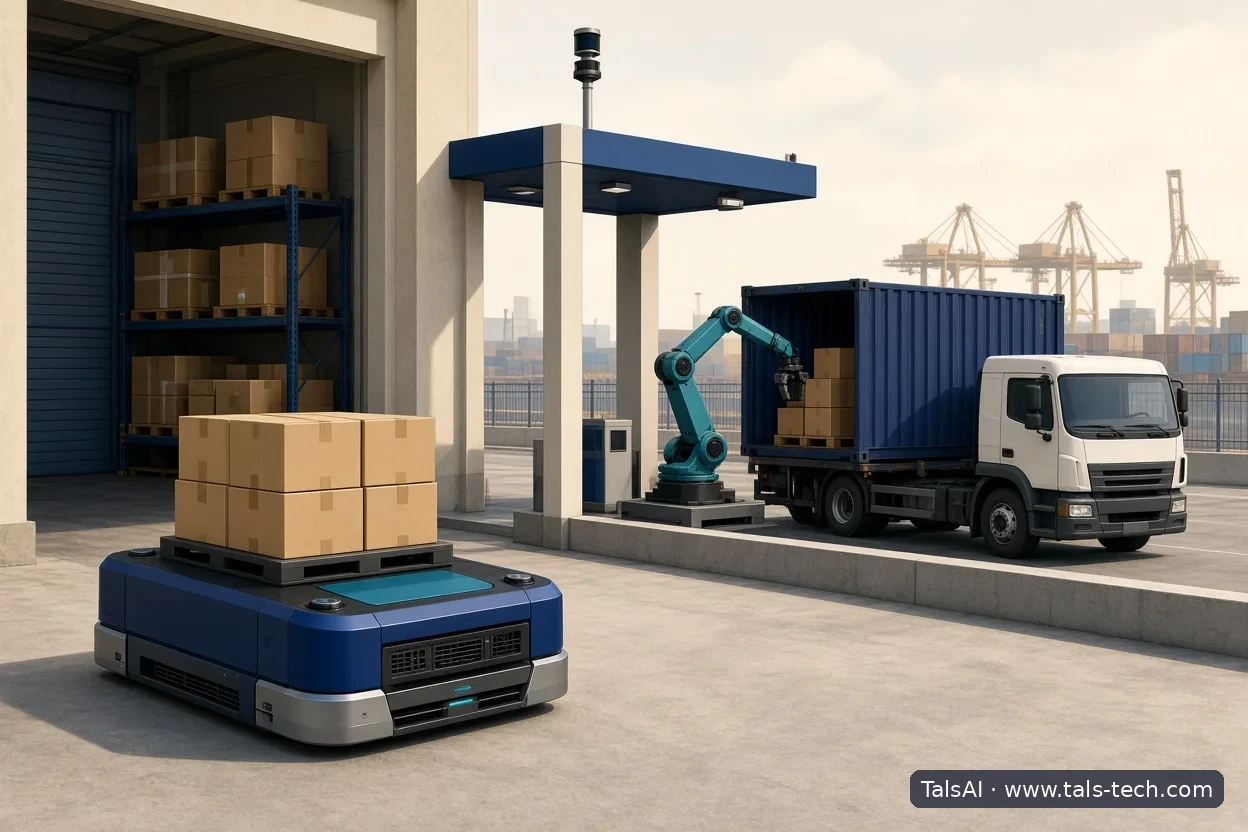
AI-generated industrial technology concept illustration, not a customer site or product screenshot.
Global warehouse automation initiatives increasingly stall not on factory testbeds, but at national maritime and land borders. Even when mechatronic engineering meets every operational requirement, administrative documentation errors can freeze multi-million-dollar capital rollouts indefinitely.
Administrative Friction vs Technical Readiness
According to field observations highlighted by Robotics & Automation News, advanced automation hardware—such as a Skypod system engineered over eighteen months—can sit idle in maritime customs depots for up to six weeks simply due to an erroneous harmonized tariff code. In reported instances, the underlying robotics hardware functioned as designed, yet shipments were halted entirely because administrative paperwork failed to satisfy port regulatory standards.
This reality exposes a structural blind spot among global automation engineering teams. While mechanical, electrical, and software developers focus intensively on payload throughput, fleet orchestration, and PLC integration, regulatory export-import classifications are frequently treated as transactional logistics tasks delegated to third-party forwarders without deep mechatronic insight.
Operational Fallout Across Deployment Schedules
When automated storage and retrieval systems are detained at inbound ports, the financial and operational consequences ripple throughout the enterprise supply chain. Civil works, grid connections, and system integration crews booked months in advance face mandatory standby periods, accumulating severe idle costs and disrupting interdependent plant milestones.
Furthermore, prolonged harbor detention exposes precision automation assets to uncontrolled environmental risks, including ambient humidity, coastal salinity, and vibrations from repeated container relocations. Consequently, project timelines slip by quarters rather than days, turning documentation oversights into warranty disputes and delayed commercial operations.
Resolving Robotics Classification Bottlenecks
Modern logistics robots present an inherent regulatory dilemma because legacy Harmonized Tariff Schedules were written for static machinery or conventional vehicles, not composite autonomous systems. Classifying a mobile automated guided vehicle equipped with specialized picking manipulators, lithium-ion battery assemblies, and advanced optical vision requires granular bill-of-materials deconstruction rather than a single generic machinery code.
Cross-functional collaboration between automation engineers and trade compliance managers is no longer an administrative luxury, but an operational prerequisite. If technical product owners do not work directly with trade specialists to validate customs determinations before shipping, advanced automation rollouts will continue to suffer costly downtime at border terminals.
Key Statistics
- A Skypod system requiring 18 months of engineering sat in port warehouses for six weeks due to incorrect tariff codes in two observed cases (Robotics & Automation News).
Outlook
At TALS, we view warehouse automation not merely as mechanical deployment, but as an interconnected smart-manufacturing process where master data, trade readiness, and operational commissioning must advance in absolute synchronization.
Related product and scope
For this topic, explore TalsAI’s WMS warehouse management: locations, stock movements and production material issues and returns. This is not an endorsement by the original news source.
Source date: 2026-10-15 11:12 UTC
Original source