
Software-Defined Automation Reshapes Industrial Maintenance - TALS
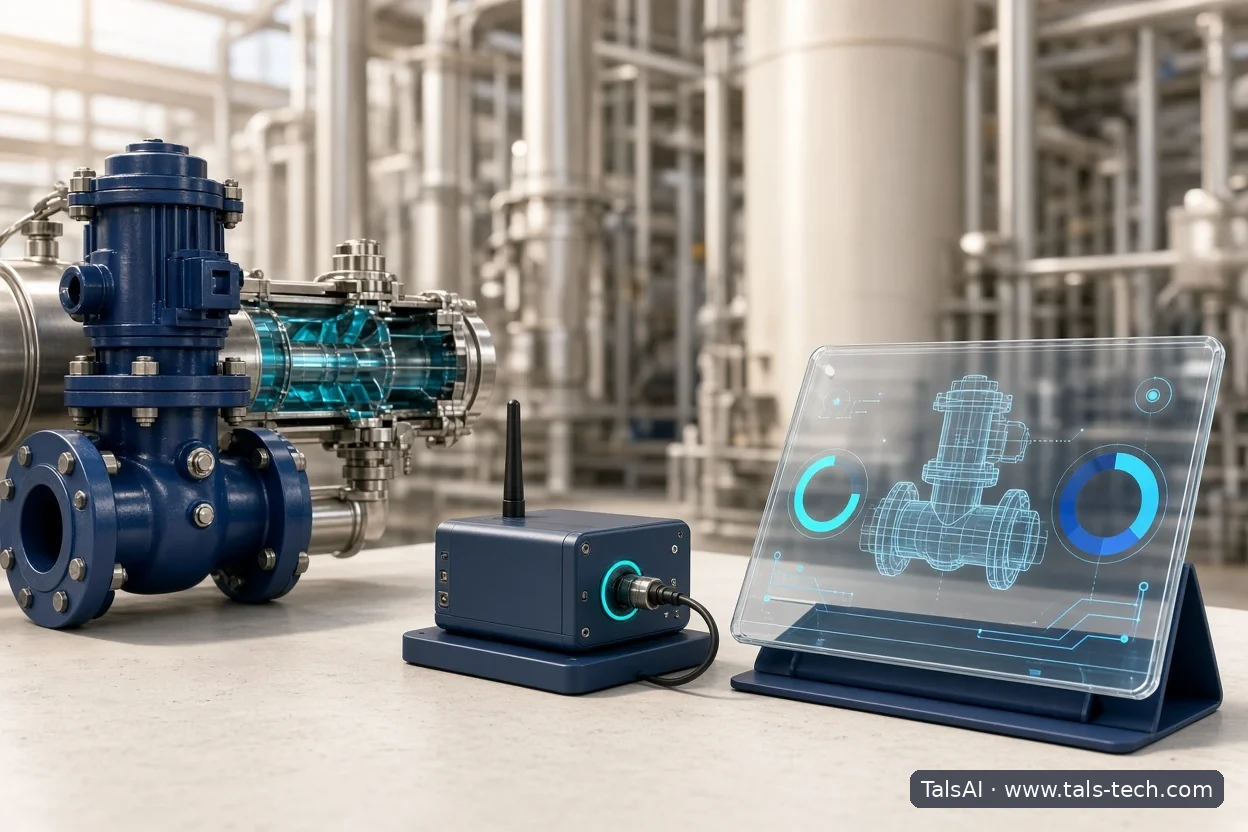
AI-generated industrial technology concept illustration, not a customer site or product screenshot.
According to reporting by Capmad, software-defined automation is steadily transforming predictive maintenance strategies across industrial plants in Africa. By unbundling diagnostic intelligence from proprietary field hardware, this transition allows modernizing facilities to transcend legacy infrastructure constraints.
Decoupling Intelligence from Proprietary Hardware
Traditional condition monitoring across manufacturing plants has historically depended on proprietary sensors and vendor-locked controllers, requiring substantial capital investment and rigid supply chain support. In emerging manufacturing hubs, these legacy procurement requirements frequently stall continuous improvement projects. Software-defined automation alters this dynamic by running diagnostic logic and anomaly detection on commodity edge-computing infrastructure, liberating analytical routines from specific hardware platforms.
This architectural evolution allows plant operators to ingest telemetry from existing machinery without wholesale line replacements. By abstracting control and analytic functions into portable software containers, facilities can capture high-frequency vibration, thermal, and electrical metrics affordably. The resulting capability transforms asset modernization from a prohibitive multi-year overhaul into an iterative, software-driven deployment model tailored to lean operational budgets.
Operational Agility on the Factory Floor
Deploying predictive algorithms closer to field assets shifts day-to-day operations from reactive troubleshooting to structured, condition-based scheduling. When rotating components or drives exhibit early mechanical degradation, software-defined engines can match signatures against degradation profiles and trigger maintenance tickets automatically. Preventing unexpected catastrophic failures protects upstream assembly processes, preserving continuous throughput and shielding capital assets from avoidable downtime.
Furthermore, this software-centric methodology democratizes machine health insights across operational teams. Dispersed equipment footprints can share unified analytical baselines, converting isolated engineering know-how into reproducible diagnostic rules. For industrial operations facing acute shortages of specialized reliability engineers, algorithmic guidance standardizes daily inspections, reduces reliance on manual assessments, and secures overall equipment efficiency.
Infrastructure Constraints and Engineering Reality
Realizing the benefits of software-defined reliability demands overcoming tough physical and technical realities. Industrial sites in developing manufacturing corridors often contend with intermittent network connectivity, irregular power delivery, and heterogeneous legacy communication protocols. If edge predictive models cannot sustain deterministic local operation during communications dropouts, the reliability stack risks generating erroneous alerts or failing entirely during critical operations.
Organizational friction presents another persistent hurdle. Algorithmic maintenance tools require continuous tuning against specific operational cycles and mechanical fatigue patterns. Without dedicated personnel trained at the intersection of operational technology and software maintenance, manufacturers risk deploying black-box algorithms that fail to adapt over time, ultimately creating fresh dependency on external service providers.
Outlook
Software-defined automation proves that advanced asset health monitoring does not require cost-prohibitive hardware replacements. At TALS, we believe combining modular edge software with open execution systems enables forward-looking factories to achieve industrial resilience on pragmatic terms.
Related product and scope
For this topic, explore TalsAI’s MES manufacturing execution system: work orders, shop-floor reporting and production progress; machine connectivity is project-specific. This is not an endorsement by the original news source.
Source date: 2026-10-06T01:21:00+00:00
Original source