
AI Infrastructure and Connectivity Reshape Factory Floors - TALS
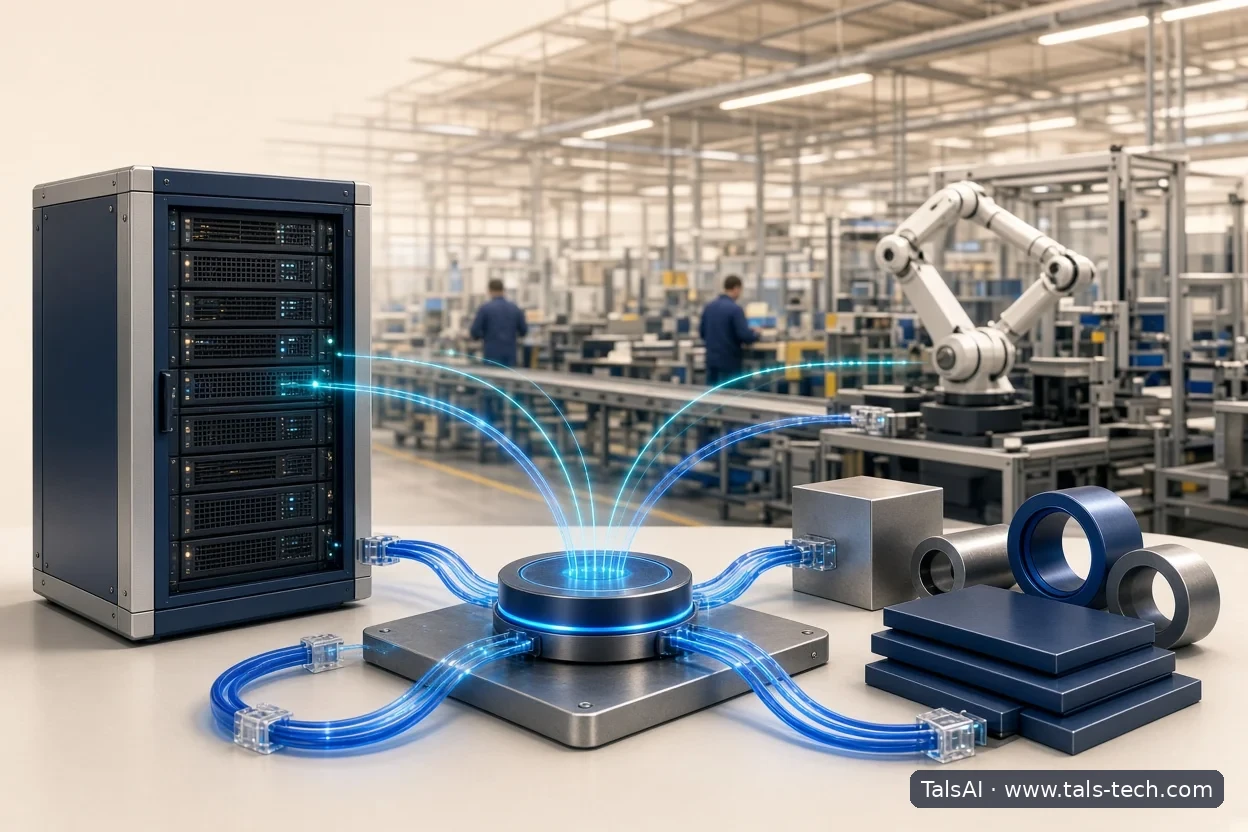
AI-generated industrial technology concept illustration, not a customer site or product screenshot.
DigiKey has launched Season 6 of its Factory Tomorrow video series, spotlighting artificial intelligence infrastructure, industrial connectivity, and smart manufacturing. This editorial perspective underscores that advanced factory intelligence cannot scale without a solid foundation in industrial networking and physical compute hardware.
Industrial Hardware Underpins Factory Intelligence
According to industry coverage by EE Times Asia, DigiKey is focusing its Factory Tomorrow series on the interplay between AI infrastructure and industrial connectivity. The initiative draws attention to the fundamental hardware pipeline that enables smart manufacturing, showing that ecosystem suppliers are prioritizing the physical layer as automated production enters more compute-heavy environments.
This emphasis reflects a critical operational reality across modern discrete and process industries. Artificial intelligence models deliver practical value only when the underlying network fabric can ingest, synchronize, and transport device signals without latency or packet loss. Without adequate physical infrastructure, sophisticated predictive tools remain theoretical exercises decoupled from real-time line control.
Operational Gains from Deterministic Edge Connectivity
From an operations standpoint, modern industrial connectivity bridges the historical divide between operational technology on the shop floor and enterprise-level analytics. By replacing fragmented communication channels with unified industrial networking, plants can capture high-frequency parameters from field devices, feeding contextual telemetry directly into operational decision engines.
Furthermore, integrating AI-capable hardware directly into the field environment mitigates the network saturation risks inherent in pure cloud architectures. Edge-based compute units can perform local computer vision inferencing and vibration anomaly detection within milliseconds. This localized processing reduces communication bottlenecks, minimizes system exposure to external outages, and empowers plant operators to resolve process deviations before quality thresholds slip.
Field Integration Realities and Brownfield Debt
Deploying modern AI infrastructure and expanded connectivity across manufacturing environments nevertheless exposes substantial technical trade-offs. The predominant barrier remains brownfield legacy equipment, where heterogeneous legacy bus systems and proprietary controller protocols resist seamless standardization, often demanding customized abstraction layers and costly industrial gateways.
Beyond hardware compatibility, expanding networked edge devices significantly expands the physical cyber-attack surface and elevates lifecycle maintenance costs. Industrial engineering teams frequently discover that keeping distributed embedded processors, firmware baselines, and secure industrial protocols updated across thousands of production nodes strains field resources, potentially generating technical debt if network governance is neglected.
Outlook
Sustainable digital transformation requires manufacturers to anchor advanced intelligence onto robust, manageable connectivity architectures. TALS helps enterprises bridge this hardware-to-software divide, turning connected industrial signals into structured operational control.
Related product and scope
For this topic, explore TalsAI’s MES manufacturing execution system: work orders, shop-floor reporting and production progress; machine connectivity is project-specific. This is not an endorsement by the original news source.
Source date: 2026-10-01T23:57:47+00:00
Original source