
How Digital Twins Are Reshaping Manufacturing Execution Systems - TALS
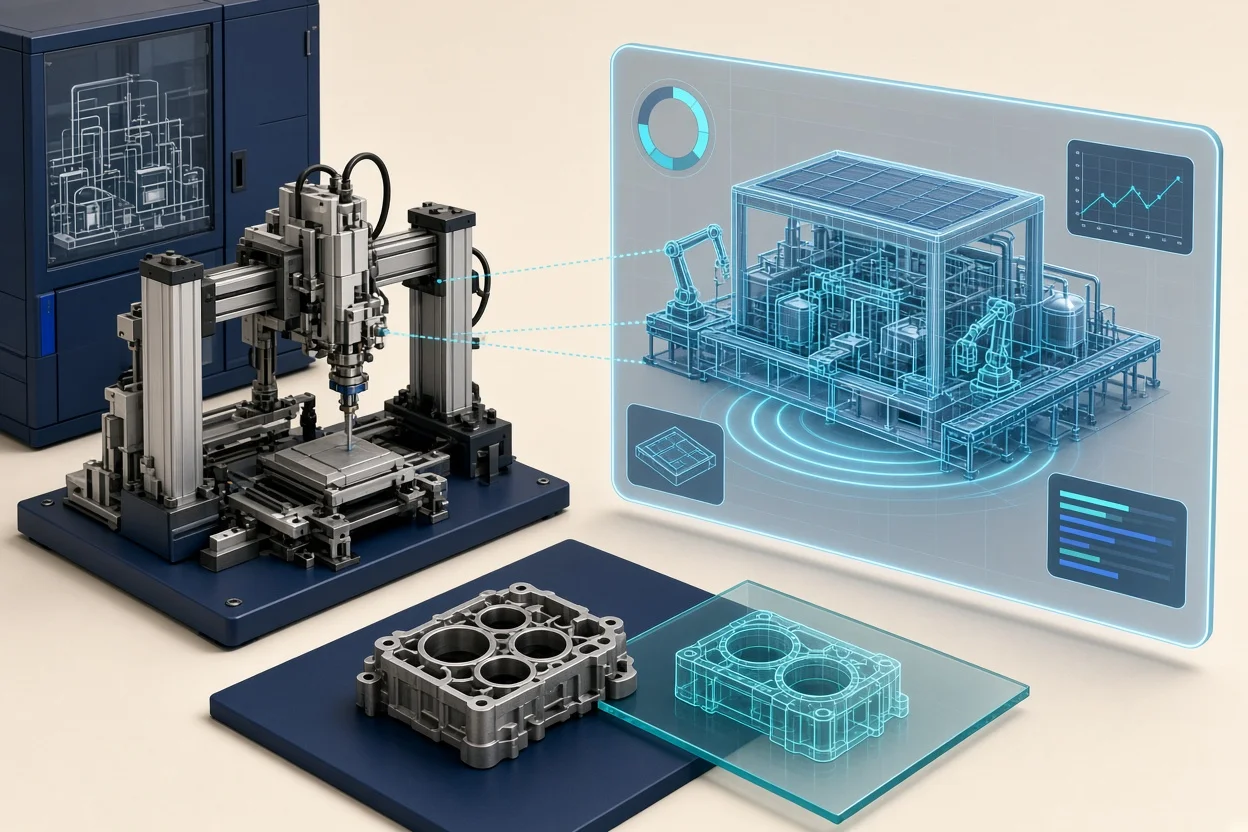
AI-generated industrial technology concept illustration, not a customer site or product screenshot.
Modern manufacturing environments require dynamic responsiveness that traditional static workflows can no longer sustain alone. By converging real-time operational telemetry with virtual replicas, digital twins are turning traditional Manufacturing Execution Systems (MES) into proactive, predictive engines.
From Reactive Tracking to Real-Time Simulation
Traditional MES solutions excel at tracking production progress, maintaining genealogy, and recording historical shop-floor states. When paired with digital twins, the architecture evolves beyond retrospective logging into real-time operational simulation. Plant engineers can evaluate line reconfigurations, simulate bottleneck scenarios, and validate scheduling adjustments virtually before executing them on physical machinery, mitigating disruption risks.
Synchronized Telemetry and Closed-Loop Control
A manufacturing digital twin relies on live sensor data, machine telemetry, and operational parameters orchestrated by the MES. This bi-directional feedback loop enables automated anomaly detection and closed-loop setpoint tuning. As deviation patterns emerge, the MES can dynamically reschedule dispatch tasks and alert maintenance crews, preventing quality drifts and unplanned downtime before equipment reaches critical failure thresholds.
Outlook
At TALS, we design integrated MES and smart factory architectures that bridge virtual modeling and physical execution, empowering industrial enterprises with predictive operational agility.
Source date: 2025-10-18T08:33:21+00:00
Original source