
AI Powers Industrial Control and Automation - TALS
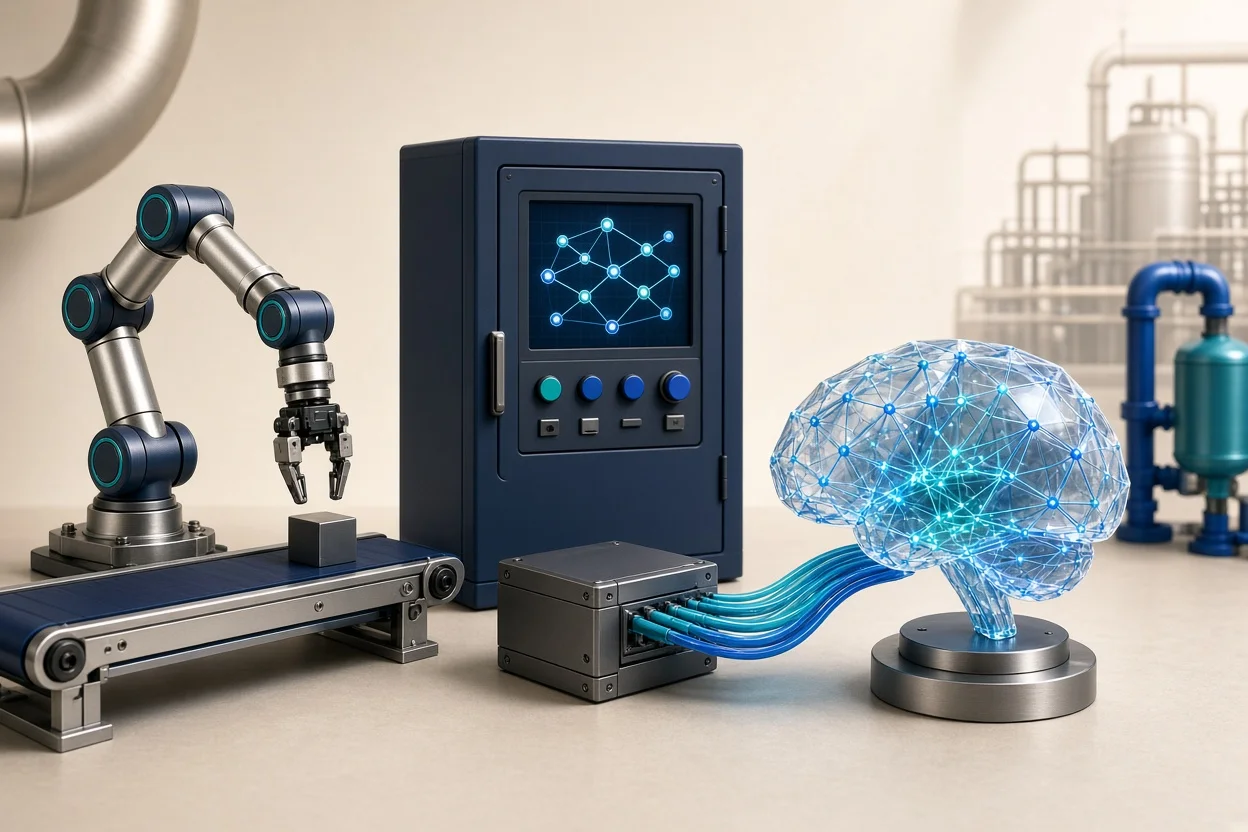
AI-generated industrial technology concept illustration, not a customer site or product screenshot.
Industrial control and factory automation are undergoing rapid transformation as artificial intelligence redefines traditional manufacturing boundaries. Modern production environments increasingly shift from rigid operational routines toward adaptive, data-driven control architectures.
Convergence of Automation Hardware and AI
Traditional programmable logic controllers and distributed control systems are increasingly adopting machine learning algorithms directly at the edge. This integration enables automated machinery to interpret multivariate telemetry in real time, auto-tune line speeds, and proactively mitigate process drift. By embedding intelligence at the point of action, manufacturing plants minimize unexpected stoppages, stabilize quality outputs, and accommodate high-mix batch variability without requiring extensive line retooling.
Unifying Control Layers with Modern Software
While machine-level automation handles physical execution, enterprise-scale efficiency depends on the seamless coordination provided by advanced industrial software. Systems such as MES, ERP, and QMS convert localized sensor intelligence into coherent operational insights. By correlating live machine telemetry with work order schedules, supply chains, and defect containment protocols, manufacturers create an integrated governance loop that aligns machine autonomy with overarching corporate deliverables.
Outlook
True smart manufacturing relies on the seamless convergence of intelligent machine control and robust MES frameworks, turning isolated automation into sustained operational leadership.
Source date: 2026-07-16T07:00:00+00:00
Original source