
Capital Markets Focus on Industrial Automation and MES Value - TALS
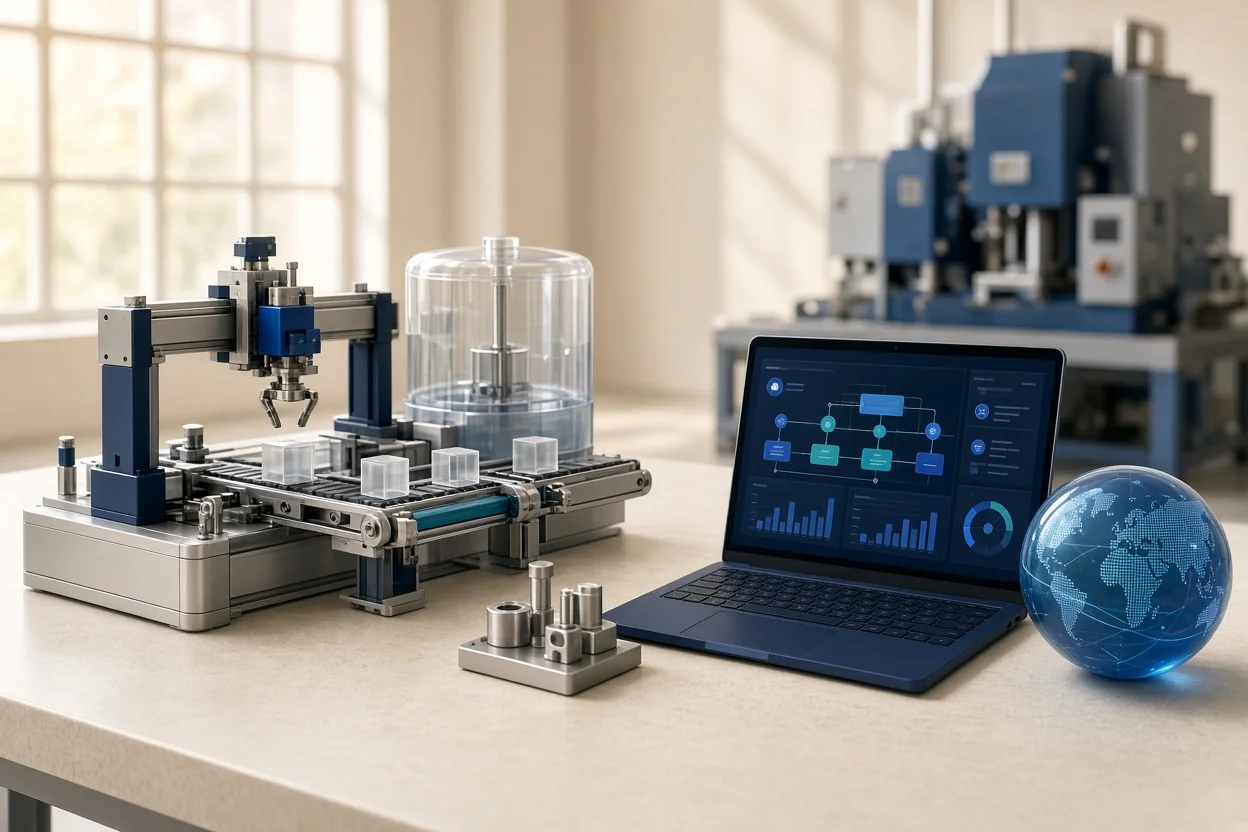
AI-generated industrial technology concept illustration, not a customer site or product screenshot.
As global manufacturers accelerate digital transformation, financial markets are paying closer attention to industrial automation software and Manufacturing Execution Systems. Once viewed primarily as plant-level tools, MES platforms are now recognized as essential digital infrastructure driving valuation and resilience.
From Shop-Floor Tool to Enterprise Asset
Modern manufacturing strategies have shifted from hardware expansion to data-driven operational efficiency. Software platforms bridging enterprise planning and factory operations now directly impact yield rates, cycle times, and asset utilization. MES has become the operational backbone that turns fragmented shop-floor data into actionable intelligence, enabling factories to respond dynamically to supply chain disruptions and shifting customer demands.
Valuation Shifts Toward Industrial Resilience
Financial analysts increasingly prize the high switching costs and sticky recurring revenues native to deep industrial software deployments. Companies investing in scalable MES and automation architectures demonstrate clearer traceability, consistent compliance, and predictable output quality, positioning them favorably against competitors relying on disparate legacy systems.
Separate the investment story from plant evidence
Market interest in industrial software is not proof that a particular implementation has produced a financial return. A manufacturer can start with its own work-order flow, rework, equipment use and traceability workload, defining how each is measured before claiming improvement. Separate observable process changes from financial projections that have not been verified. Without a baseline, a general industry narrative should not be presented as an achieved result at a specific factory.
Consider the full cost of ownership
A license quote is only part of a software decision. Data cleanup, equipment connections, interface maintenance, workflow configuration, training and upgrades each require ownership and an ongoing budget. Procurement can also ask how data is exported, how permissions are audited and what migration would involve if the platform changes. The ability to sustain and adapt existing workflows may matter more over time than the number of features shown during an initial demonstration.
Examine resilience as a governance question
When orders or supply conditions change, reliable production records can help teams identify affected jobs and batches, provided identifiers are consistent and exceptions have an owner. Management can review delays in information flow, handoffs and correction procedures rather than treating “resilience” as an untested label. In external communications, distinguish conclusions supported by operating records from future plans; a credible account of technical potential should not be confused with realized financial performance.
Related products: production and warehouse workflows
The business case for industrial software begins with documented processes rather than an assumed valuation. TalsAI’s production management software offering addresses orders, materials and shop-floor reporting, while its WMS warehouse management system offering covers locations, stock movements and production material issues or returns. Manufacturers can examine handoffs, data ownership and implementation effort across these workflows before defining how to evaluate a project. A description of product scope is not a promise of investment returns.
Outlook
For modern industrial leaders, investing in an integrated MES ecosystem is no longer merely a plant optimization decision, but a strategic imperative that underpins enterprise resilience and shareholder value.
Source date: 2026-07-17T07:00:00+00:00
Original source